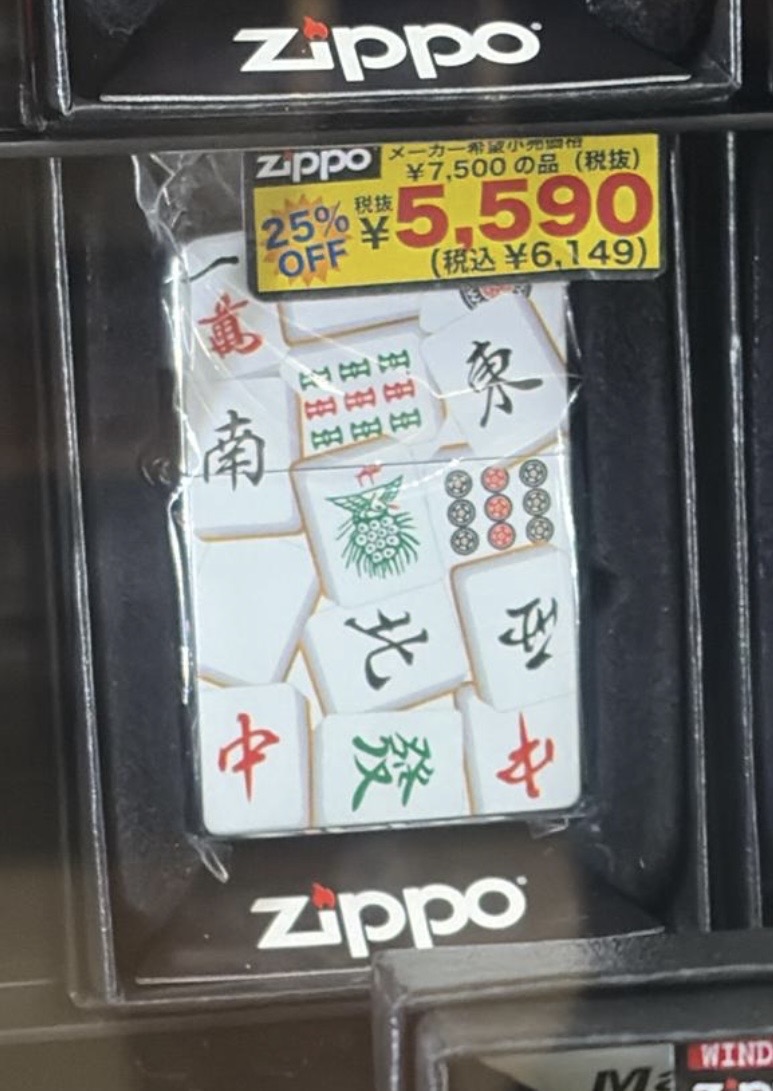
麻雀
麻雀をするという行為についての考察
Intro 私は麻雀が好きだ。
多分雀荘に毎週通う人に比べたら全然足元にも及ばないけれど、普通にプレイできるし、そもそも雀荘で働いて卓にも入っていたから、一応少なくとも好きとは言わせてもらう。
私が麻雀を始めたきっかけは…突然重いことをいうかもしれないけれど、実は自殺した友達だった。もう六年前になる。彼は大学時代よく友達と雀荘に行っていて、私はその彼の形見みたいな感覚で、何か彼の一部を引き継ぎたかったのだ。もちろん、100%自分が勝手にやっていることだけど。
今回は、自分の個人的な体験から一歩引いて、「麻雀をする」という行為について、いくつか多角的な視点から考察できればいいなと思う。
歴史と由来 そもそも麻雀の歴史を辿ると、大体の他のものと同じように、中国へまで遡る。
その源流とされるのが、明の時代に生まれた「馬弔(マーチャオ)」という紙牌(カード)ゲームだ。この馬弔やそれに連なる遊びの図柄を、竹と牛骨を組み合わせた「牌」に仕立て直したものが、現在の麻雀牌の原型だといわれる。牌の形が整い、いまに近い姿になったのは、だいたい十九世紀の半ば、清朝の後期。今から百四十年から百八十年ほど前のことになる。
成立をめぐっては諸説あって、はっきりしない。太平天国軍の陣中で生まれたという説もあれば、貿易港・寧波の税関に関わった役人や商人たちが仕立てたという説もある。いずれにせよ、開国期の中国、外国人が多く行き交う港町の空気のなかで、麻雀は形をととのえていった。
日本に入ってきたのは大正の初め頃、およそ百年前とされる。ただし、私たちがいま「麻雀」と呼んでいるスタイル ―― リーチや複雑な点数計算を含む、いわゆる**リーチ麻雀(日本式麻雀)**が完成したのは、実は戦後のことだ。つまり中国生まれのゲームが日本に渡り、独自のローカルルールを育てながら別物のように進化した結果が、いま私たちの打っている麻雀なのである。
流行とマーケット・市場的価値 そして、麻雀は今流行っている。サイバーの藤田さんが始めたMリーグはもはやメジャーだ。
Mリーグが画期的だったのは、麻雀にまとわりついてきた「賭け事」のイメージを、正面から引き剥がそうとした点にある。リーグは**ノーギャンブルを宣言**し、所属選手が金を賭ければ即除名という厳しい線を引いた。麻雀を「頭脳スポーツ(マインドスポーツ)」として位置づけ直したわけだ。最低年俸を保証し、優勝賞金を用意し、選手が「憧れられる職業」になるように設計されている。
そこには大企業が並ぶ。電通、博報堂DY、テレビ朝日、セガサミー、コナミ、U-NEXTといった顔ぶれがチームオーナーとして名を連ね、最高顧問にはJリーグ初代チェアマンの川淵三郎氏が就いた。ABEMAでの配信を土台に、これまで一般メディアにほとんど出てこなかったプロ麻雀の世界が、スポーツエンタメとして茶の間に届くようになった。
タレントとのクロスオーバーも進んだ。モデルやグラビアの世界で活動しながらプロ雀士としても卓に座る女流雀士が登場し、「アイドル/芸能」と「競技麻雀」の二枚の肩書を同時に背負う人まで現れている。どういうわけか、新しいデジタル時代に、日本独自の麻雀が上手い具合に融合しているのだ。
背景には、若い世代がそもそもオンラインで麻雀を覚え、「賭けない麻雀が当たり前」という感覚で入ってくる、という地殻変動もある。市場としての麻雀は、いま確実に広がっている。
このデジタル文明に生きる人間として、四人が卓を囲んでプレイするスタイルや、少しずつ形態を変えて日本の俗文化に長い間浸透し愛されてきたことを思うと、麻雀をすること自体は悪いことでは無いと思う。
ただ一つ。麻雀は日本の文化として認識されていいものなのか?
文化と娯楽 一度、文化と娯楽の定義の違いについて確認しておく。
文化とは、人間が社会生活の中で作り上げてきた、言葉、習慣、価値観、芸術、技術などの形のないものや、それによって得られた生活様式の総体のことだ。つまり、人々の暮らしのあり方全体を指す。
対して娯楽は、仕事や勉強などの合間に、心身をリフレッシュさせたり、日々のストレスを解消したりするために、楽しみや気晴らしとして行う活動やもの。
こうやって定義してみると、麻雀はもはや文化になりつつあると一見することはできる。
ここで、岡本太郎の考え方を紹介したい。
彼は日本の芸術家・画家で、有名な作品では万博のために作られた太陽の塔、他にも著作などがたくさんある。そして私が注目したいのは、現代人の姿を「むなしい」と表現した際の文脈だ。
彼は、麻雀やゴルフという記号化された娯楽、別の言い方をすれば、こぢんまりとした既成のルールに収まって安心している現代人を揶揄した。その背景には、いつできたのかわからない固定概念やルールを破り、縄文的な混沌や生命力を肯定する彼の思想がある。
確かに麻雀で感じる面白さというのは、彼のいうような高尚な芸術性を含む「文化」とは違う。
それは偶然と技術のあいだ、要はギャンブル性だ。カリスマ性。運。その上で人と人の駆け引き、卓上ににじむ内面。プレーに出る人柄。それはそれで、確かに豊かなものだ。
だが、岡本太郎の視線を一度くぐらせておくのは、悪くない。麻雀は他のゲームと同じように、決められた枠組みの中で存在するものに過ぎない。……たとえ、その中にアカギのようなドラマがあるとしても。
健康麻雀の存在 - それでは麻雀は、ただの娯楽ゲームか 健康麻雀について触れておきたい。
「賭けない・飲まない・吸わない」という**三ない**をルールに掲げ、日本健康麻将協会などが普及を進めている。煙が立ちこめ、金が動く雀荘のイメージとは正反対の、明るい昼間のサロンの麻雀である。
2007年には厚生労働省が主催する「ねんりんピック(全国健康福祉祭)」の正式種目となり、文化庁の国民文化祭でも大会が開かれるようになった。近年は生命保険会社が協会と提携し、全国でイベントを開くまでになっている。
医学的な期待も語られる。脳科学者の篠原菊紀氏らの調査では、麻雀中の高齢者は記憶や知的活動の中核である前頭葉の血流が増え、相手の気持ちを推し量ることに関わる部位の活動も活発になったという。しかも、生身の人間相手に打つと働くその部位は、パソコン相手の麻雀では変化しなかった ―― 四人で卓を囲むこと自体に意味がある、というわけだ。麻雀をしている高齢者の「脳年齢」が実年齢より若かった、という結果も報告されている。ただし研究者自身、これだけで認知症予防に役立つと断言はできないと慎重に付け加えている点は、公平に書いておきたい。
健康麻雀は、麻雀から賭けと酒と煙を抜いた。だが、それらこそが、麻雀を「日本の俗文化」として長く彩ってきた成分でもあった。健全化とは、言い換えれば、俗っぽさの脱色である。賭けを抜いた麻雀は、確かに健やかだ。しかしそのとき私たちが打っているのは、「文化としての麻雀」なのか、それとも純粋な「頭脳ゲーム」なのか。
Outro もちろん、好きな人が好きにすればいい。それが、一番初めの結論だ。始める理由も、私のような人もいれば、純粋に、自然な仲間内の暇つぶしとして始めた人もいるだろうし。
麻雀を文化的なものとして捉えるかどうかは自分次第だ。ある人にとってはただのゲームで、文化でもなんでも無いのかもしれない。そして娯楽的な要素としての麻雀というゲームの楽しさは、否定される必要はないと思う。ただ卓を囲む中で繰り広げられる駆け引きや生々しい本性なしでは、私はプレーするつもりはない。……とか言ってまあ、全然オンラインでもプレーするんですけどね。
麻雀(ギャンブル)はゲームプレイ中に人生ゲームのように人生や人間の内面性を表す側面はある。でも麻雀がただのゲームであるという側面は常にあって、人生自体が麻雀では無いということを、常に頭の隅に置いておくことが重要なのかもしれない。以上
2026/8/18
麻雀をするという行為についての考察
Intro 私は麻雀が好きだ。
多分雀荘に毎週通う人に比べたら全然足元にも及ばないけれど、普通にプレイできるし、そもそも雀荘で働いて卓にも入っていたから、一応少なくとも好きとは言わせてもらう。
私が麻雀を始めたきっかけは…突然重いことをいうかもしれないけれど、実は自殺した友達だった。もう六年前になる。彼は大学時代よく友達と雀荘に行っていて、私はその彼の形見みたいな感覚で、何か彼の一部を引き継ぎたかったのだ。もちろん、100%自分が勝手にやっていることだけど。
今回は、自分の個人的な体験から一歩引いて、「麻雀をする」という行為について、いくつか多角的な視点から考察できればいいなと思う。
歴史と由来 そもそも麻雀の歴史を辿ると、大体の他のものと同じように、中国へまで遡る。
その源流とされるのが、明の時代に生まれた「馬弔(マーチャオ)」という紙牌(カード)ゲームだ。この馬弔やそれに連なる遊びの図柄を、竹と牛骨を組み合わせた「牌」に仕立て直したものが、現在の麻雀牌の原型だといわれる。牌の形が整い、いまに近い姿になったのは、だいたい十九世紀の半ば、清朝の後期。今から百四十年から百八十年ほど前のことになる。
成立をめぐっては諸説あって、はっきりしない。太平天国軍の陣中で生まれたという説もあれば、貿易港・寧波の税関に関わった役人や商人たちが仕立てたという説もある。いずれにせよ、開国期の中国、外国人が多く行き交う港町の空気のなかで、麻雀は形をととのえていった。
日本に入ってきたのは大正の初め頃、およそ百年前とされる。ただし、私たちがいま「麻雀」と呼んでいるスタイル ―― リーチや複雑な点数計算を含む、いわゆる**リーチ麻雀(日本式麻雀)**が完成したのは、実は戦後のことだ。つまり中国生まれのゲームが日本に渡り、独自のローカルルールを育てながら別物のように進化した結果が、いま私たちの打っている麻雀なのである。
流行とマーケット・市場的価値 そして、麻雀は今流行っている。サイバーの藤田さんが始めたMリーグはもはやメジャーだ。
Mリーグが画期的だったのは、麻雀にまとわりついてきた「賭け事」のイメージを、正面から引き剥がそうとした点にある。リーグは**ノーギャンブルを宣言**し、所属選手が金を賭ければ即除名という厳しい線を引いた。麻雀を「頭脳スポーツ(マインドスポーツ)」として位置づけ直したわけだ。最低年俸を保証し、優勝賞金を用意し、選手が「憧れられる職業」になるように設計されている。
そこには大企業が並ぶ。電通、博報堂DY、テレビ朝日、セガサミー、コナミ、U-NEXTといった顔ぶれがチームオーナーとして名を連ね、最高顧問にはJリーグ初代チェアマンの川淵三郎氏が就いた。ABEMAでの配信を土台に、これまで一般メディアにほとんど出てこなかったプロ麻雀の世界が、スポーツエンタメとして茶の間に届くようになった。
タレントとのクロスオーバーも進んだ。モデルやグラビアの世界で活動しながらプロ雀士としても卓に座る女流雀士が登場し、「アイドル/芸能」と「競技麻雀」の二枚の肩書を同時に背負う人まで現れている。どういうわけか、新しいデジタル時代に、日本独自の麻雀が上手い具合に融合しているのだ。
背景には、若い世代がそもそもオンラインで麻雀を覚え、「賭けない麻雀が当たり前」という感覚で入ってくる、という地殻変動もある。市場としての麻雀は、いま確実に広がっている。
このデジタル文明に生きる人間として、四人が卓を囲んでプレイするスタイルや、少しずつ形態を変えて日本の俗文化に長い間浸透し愛されてきたことを思うと、麻雀をすること自体は悪いことでは無いと思う。
ただ一つ。麻雀は日本の文化として認識されていいものなのか?
文化と娯楽 一度、文化と娯楽の定義の違いについて確認しておく。
文化とは、人間が社会生活の中で作り上げてきた、言葉、習慣、価値観、芸術、技術などの形のないものや、それによって得られた生活様式の総体のことだ。つまり、人々の暮らしのあり方全体を指す。
対して娯楽は、仕事や勉強などの合間に、心身をリフレッシュさせたり、日々のストレスを解消したりするために、楽しみや気晴らしとして行う活動やもの。
こうやって定義してみると、麻雀はもはや文化になりつつあると一見することはできる。
ここで、岡本太郎の考え方を紹介したい。
彼は日本の芸術家・画家で、有名な作品では万博のために作られた太陽の塔、他にも著作などがたくさんある。そして私が注目したいのは、現代人の姿を「むなしい」と表現した際の文脈だ。
彼は、麻雀やゴルフという記号化された娯楽、別の言い方をすれば、こぢんまりとした既成のルールに収まって安心している現代人を揶揄した。その背景には、いつできたのかわからない固定概念やルールを破り、縄文的な混沌や生命力を肯定する彼の思想がある。
確かに麻雀で感じる面白さというのは、彼のいうような高尚な芸術性を含む「文化」とは違う。
それは偶然と技術のあいだ、要はギャンブル性だ。カリスマ性。運。その上で人と人の駆け引き、卓上ににじむ内面。プレーに出る人柄。それはそれで、確かに豊かなものだ。
だが、岡本太郎の視線を一度くぐらせておくのは、悪くない。麻雀は他のゲームと同じように、決められた枠組みの中で存在するものに過ぎない。……たとえ、その中にアカギのようなドラマがあるとしても。
健康麻雀の存在 - それでは麻雀は、ただの娯楽ゲームか 健康麻雀について触れておきたい。
「賭けない・飲まない・吸わない」という**三ない**をルールに掲げ、日本健康麻将協会などが普及を進めている。煙が立ちこめ、金が動く雀荘のイメージとは正反対の、明るい昼間のサロンの麻雀である。
2007年には厚生労働省が主催する「ねんりんピック(全国健康福祉祭)」の正式種目となり、文化庁の国民文化祭でも大会が開かれるようになった。近年は生命保険会社が協会と提携し、全国でイベントを開くまでになっている。
医学的な期待も語られる。脳科学者の篠原菊紀氏らの調査では、麻雀中の高齢者は記憶や知的活動の中核である前頭葉の血流が増え、相手の気持ちを推し量ることに関わる部位の活動も活発になったという。しかも、生身の人間相手に打つと働くその部位は、パソコン相手の麻雀では変化しなかった ―― 四人で卓を囲むこと自体に意味がある、というわけだ。麻雀をしている高齢者の「脳年齢」が実年齢より若かった、という結果も報告されている。ただし研究者自身、これだけで認知症予防に役立つと断言はできないと慎重に付け加えている点は、公平に書いておきたい。
健康麻雀は、麻雀から賭けと酒と煙を抜いた。だが、それらこそが、麻雀を「日本の俗文化」として長く彩ってきた成分でもあった。健全化とは、言い換えれば、俗っぽさの脱色である。賭けを抜いた麻雀は、確かに健やかだ。しかしそのとき私たちが打っているのは、「文化としての麻雀」なのか、それとも純粋な「頭脳ゲーム」なのか。
Outro もちろん、好きな人が好きにすればいい。それが、一番初めの結論だ。始める理由も、私のような人もいれば、純粋に、自然な仲間内の暇つぶしとして始めた人もいるだろうし。
麻雀を文化的なものとして捉えるかどうかは自分次第だ。ある人にとってはただのゲームで、文化でもなんでも無いのかもしれない。そして娯楽的な要素としての麻雀というゲームの楽しさは、否定される必要はないと思う。ただ卓を囲む中で繰り広げられる駆け引きや生々しい本性なしでは、私はプレーするつもりはない。……とか言ってまあ、全然オンラインでもプレーするんですけどね。
麻雀(ギャンブル)はゲームプレイ中に人生ゲームのように人生や人間の内面性を表す側面はある。でも麻雀がただのゲームであるという側面は常にあって、人生自体が麻雀では無いということを、常に頭の隅に置いておくことが重要なのかもしれない。以上
2026/8/18
Mahjong
Considerations on the Act of Playing Mahjong
Intro I like mahjong.
Compared to the people who go to a mahjong parlor every week, I'm nowhere close — but I can play just fine, and I actually worked at a parlor and sat at the tables myself with strangers, so let me at least call myself a fan.
The reason I started playing mahjong was, in fact it sounds suddenly heavy, a friend who took his own life. That was six years ago. Back in university I knew he often went to parlors with his own friends, and for me mahjong became something like a keepsake of his — I wanted to carry on some part of him. Of course, it's a hundred percent something I'm doing on my own.
This time, I want to step back from my personal experience and think about the act of "playing mahjong" from a few different angles.
History and origins Trace the history of mahjong and, like most things, you end up back in China.
Its source is said to be a paper-card game called Madiao (Machao), born in the Ming dynasty. The figures from Madiao and the games descended from it were re-made into "tiles" that combined bamboo and ox bone, and that is said to be the prototype of today's mahjong tiles. The tiles took on roughly their current shape around the mid-nineteenth century, in the late Qing — somewhere between 140 and 180 years ago.
Its origins are disputed and unclear. Some say it was born in the camps of the Taiping Heavenly Kingdom army; others that it was put together by the officials and merchants tied to the customs house at the trading port of Ningbo. Either way, mahjong took shape in the air of an opening China, in port towns where foreigners came and went.
It arrived in Japan around the start of the Taisho era, roughly a hundred years ago. But the style we now call "mahjong" — riichi mahjong (Japanese-style mahjong), with its riichi calls and its complicated scoring — was actually completed around the world war period. In other words, a game born in China crossed over to Japan, grew its own local rules, and evolved into something almost entirely different: that is the mahjong we play today.
Popularity and market value And right now, mahjong is having a moment in Japan. The M.League, started by Fujita of CyberAgent, is already mainstream.
What made the M.League groundbreaking was that it tried to peel off, head-on, the "gambling" image that had always clung to mahjong. The league declared itself no-gambling: any player who bets money is expelled on the spot. It repositioned mahjong as a "mind sport." It guarantees a minimum salary, puts up prize money, and is designed so that being a mahjong pro becomes a job worth aspiring to.
Big corporations line up behind it. Dentsu, Hakuhodo DY, TV Asahi, Sega Sammy, Konami, U-NEXT and others are listed as team owners, and Saburo Kawabuchi, the first chairman of the J.League, took the post of supreme advisor. Built on streaming through ABEMA, the world of pro mahjong — which had barely shown up in mainstream media — began reaching living rooms as sports entertainment.
Crossovers with celebrities have advanced, too. Women pros who also work in modeling and gravure have appeared at the tables, and there are even talents who carry the two titles of "idol/entertainer" and "competitive mahjong player" at once. Somehow, in this new digital age, Japan's own mahjong has blended in rather nicely. Behind this is a tectonic shift: the younger generations learn mahjong online in the first place, and come in with the sense that mahjong without betting is the norm. As a market, mahjong is expanding, without a doubt.
As someone living in this digital civilization, when I think about the style of four people sitting around a table, and how — changing its form little by little — it seeped into Japan's low, everyday culture and was loved there for so long, I don't think playing mahjong is a bad thing in itself.
Just one thing. Is it really all right for mahjong to be recognized as Japanese culture?
Culture and entertainment Let me first check the difference between the definitions of "culture" and "entertainment."
Culture: the whole body of intangible things — language, customs, values, art, technology — that human beings have built up in social life, and the way of living obtained through them. It points to the entire shape of how people live. On the other hand —Entertainment: an activity or thing done as enjoyment or a diversion — to refresh the mind and body, or to relieve everyday stress — in the gaps between work, study, and so on.
Defined this way, you could, at a glance, take mahjong to be turning into culture.
Here I want to introduce Taro Okamoto's way of thinking. He was a Japanese artist and painter; among his famous works is the Tower of the Sun, made for the Expo, and he left many writings as well. What I want to focus on is the context in which he described the figure of modern people as "hollow."
He mocked modern people who sit comfortably, tucked inside ready-made rules — the codified amusements symbolized, in his words, by mahjong and golf. Behind this lies his thought: to break fixed ideas and rules whose origins nobody even knows, and to affirm a Jomon-like chaos and life force.
It's true that the fun I feel in mahjong is different from the "culture" that carries the lofty artistry he speaks of. It lives somewhere between chance and skill — in short, it's the gambling in it. Charisma. Luck. And on top of that, the push and pull between people, the inner self that bleeds onto the table, the character that comes out in your play. That, in its own way, is certainly something rich.
Still, it's not a bad idea to pass mahjong once through Okamoto's gaze. Mahjong, like any other game, is nothing more than something that exists inside a set frame. …even if, within that frame, there is drama like in Akagi.
Health mahjong So then, is mahjong just an amusement-game?
I want to touch on health mahjong. Under the banner of the "three nots" — no betting, no drinking, no smoking — the Japan Health Mahjong Association and others are spreading it. It's the exact opposite of the smoke-filled, money-moving image of the parlor: mahjong in a bright daytime salon.
In 2007 it became an official event of the "Nenrin Pick" (the National Health and Welfare Festival for the Elderly), hosted by the Ministry of Health, Labour and Welfare, and tournaments began to be held at the Agency for Cultural Affairs' National Cultural Festival as well. In recent years a life-insurance company has even partnered with the association to hold events across the country.
Medical hopes are spoken of, too.
In a study by the neuroscientist Kikunori Shinohara and his colleagues, elderly people playing mahjong showed increased blood flow in the frontal lobe — the core of memory and intellectual activity — and heightened activity in the region tied to reading other people's feelings. And that region, which works when you play against a living human, didn't change when they played against a computer — meaning there's significance in the very act of four people sitting around a table. It was also reported that the "brain age" of the elderly people who play mahjong was younger than their actual age. Though, to be fair, I should note that the researcher himself cautiously added that this alone can't be said to help prevent dementia.
There's a paradox here. Health mahjong pulled the betting, the alcohol, and the smoke out of mahjong. But those were the very ingredients that had long colored mahjong as Japan's "low culture." To make something wholesome is, in other words, to bleach out its vulgarity. Mahjong with the betting removed is certainly healthy. But at that point, is what we're playing "mahjong as culture," or a pure "brain game"?
final note Of course, whoever likes it should do as they like. That is the first conclusion, right from the start. The reasons for starting differ, too — there are people like me, and surely people who started it purely as a natural way to kill time among friends.
Whether you take mahjong as something cultural is up to you. For some people it's just a game, maybe not culture or anything at all. I also affirm the fun of mahjong as a game, as an amusement. But, without the push and pull, and the raw human nature that unfold around the table, I personally don't intend to play. …though, well, I totally still play online all the time anyway.
And the other way around — mahjong (gambling) may have a side that, during play, reveals life and the human interior like the board game Life; but the side of it that is just a game is always there, and it may be important to keep, always, in a corner of your mind, that life itself is not mahjong. That's all.
18/8/2026
Considerations on the Act of Playing Mahjong
Intro I like mahjong.
Compared to the people who go to a mahjong parlor every week, I'm nowhere close — but I can play just fine, and I actually worked at a parlor and sat at the tables myself with strangers, so let me at least call myself a fan.
The reason I started playing mahjong was, in fact it sounds suddenly heavy, a friend who took his own life. That was six years ago. Back in university I knew he often went to parlors with his own friends, and for me mahjong became something like a keepsake of his — I wanted to carry on some part of him. Of course, it's a hundred percent something I'm doing on my own.
This time, I want to step back from my personal experience and think about the act of "playing mahjong" from a few different angles.
History and origins Trace the history of mahjong and, like most things, you end up back in China.
Its source is said to be a paper-card game called Madiao (Machao), born in the Ming dynasty. The figures from Madiao and the games descended from it were re-made into "tiles" that combined bamboo and ox bone, and that is said to be the prototype of today's mahjong tiles. The tiles took on roughly their current shape around the mid-nineteenth century, in the late Qing — somewhere between 140 and 180 years ago.
Its origins are disputed and unclear. Some say it was born in the camps of the Taiping Heavenly Kingdom army; others that it was put together by the officials and merchants tied to the customs house at the trading port of Ningbo. Either way, mahjong took shape in the air of an opening China, in port towns where foreigners came and went.
It arrived in Japan around the start of the Taisho era, roughly a hundred years ago. But the style we now call "mahjong" — riichi mahjong (Japanese-style mahjong), with its riichi calls and its complicated scoring — was actually completed around the world war period. In other words, a game born in China crossed over to Japan, grew its own local rules, and evolved into something almost entirely different: that is the mahjong we play today.
Popularity and market value And right now, mahjong is having a moment in Japan. The M.League, started by Fujita of CyberAgent, is already mainstream.
What made the M.League groundbreaking was that it tried to peel off, head-on, the "gambling" image that had always clung to mahjong. The league declared itself no-gambling: any player who bets money is expelled on the spot. It repositioned mahjong as a "mind sport." It guarantees a minimum salary, puts up prize money, and is designed so that being a mahjong pro becomes a job worth aspiring to.
Big corporations line up behind it. Dentsu, Hakuhodo DY, TV Asahi, Sega Sammy, Konami, U-NEXT and others are listed as team owners, and Saburo Kawabuchi, the first chairman of the J.League, took the post of supreme advisor. Built on streaming through ABEMA, the world of pro mahjong — which had barely shown up in mainstream media — began reaching living rooms as sports entertainment.
Crossovers with celebrities have advanced, too. Women pros who also work in modeling and gravure have appeared at the tables, and there are even talents who carry the two titles of "idol/entertainer" and "competitive mahjong player" at once. Somehow, in this new digital age, Japan's own mahjong has blended in rather nicely. Behind this is a tectonic shift: the younger generations learn mahjong online in the first place, and come in with the sense that mahjong without betting is the norm. As a market, mahjong is expanding, without a doubt.
As someone living in this digital civilization, when I think about the style of four people sitting around a table, and how — changing its form little by little — it seeped into Japan's low, everyday culture and was loved there for so long, I don't think playing mahjong is a bad thing in itself.
Just one thing. Is it really all right for mahjong to be recognized as Japanese culture?
Culture and entertainment Let me first check the difference between the definitions of "culture" and "entertainment."
Culture: the whole body of intangible things — language, customs, values, art, technology — that human beings have built up in social life, and the way of living obtained through them. It points to the entire shape of how people live. On the other hand —Entertainment: an activity or thing done as enjoyment or a diversion — to refresh the mind and body, or to relieve everyday stress — in the gaps between work, study, and so on.
Defined this way, you could, at a glance, take mahjong to be turning into culture.
Here I want to introduce Taro Okamoto's way of thinking. He was a Japanese artist and painter; among his famous works is the Tower of the Sun, made for the Expo, and he left many writings as well. What I want to focus on is the context in which he described the figure of modern people as "hollow."
He mocked modern people who sit comfortably, tucked inside ready-made rules — the codified amusements symbolized, in his words, by mahjong and golf. Behind this lies his thought: to break fixed ideas and rules whose origins nobody even knows, and to affirm a Jomon-like chaos and life force.
It's true that the fun I feel in mahjong is different from the "culture" that carries the lofty artistry he speaks of. It lives somewhere between chance and skill — in short, it's the gambling in it. Charisma. Luck. And on top of that, the push and pull between people, the inner self that bleeds onto the table, the character that comes out in your play. That, in its own way, is certainly something rich.
Still, it's not a bad idea to pass mahjong once through Okamoto's gaze. Mahjong, like any other game, is nothing more than something that exists inside a set frame. …even if, within that frame, there is drama like in Akagi.
Health mahjong So then, is mahjong just an amusement-game?
I want to touch on health mahjong. Under the banner of the "three nots" — no betting, no drinking, no smoking — the Japan Health Mahjong Association and others are spreading it. It's the exact opposite of the smoke-filled, money-moving image of the parlor: mahjong in a bright daytime salon.
In 2007 it became an official event of the "Nenrin Pick" (the National Health and Welfare Festival for the Elderly), hosted by the Ministry of Health, Labour and Welfare, and tournaments began to be held at the Agency for Cultural Affairs' National Cultural Festival as well. In recent years a life-insurance company has even partnered with the association to hold events across the country.
Medical hopes are spoken of, too.
In a study by the neuroscientist Kikunori Shinohara and his colleagues, elderly people playing mahjong showed increased blood flow in the frontal lobe — the core of memory and intellectual activity — and heightened activity in the region tied to reading other people's feelings. And that region, which works when you play against a living human, didn't change when they played against a computer — meaning there's significance in the very act of four people sitting around a table. It was also reported that the "brain age" of the elderly people who play mahjong was younger than their actual age. Though, to be fair, I should note that the researcher himself cautiously added that this alone can't be said to help prevent dementia.
There's a paradox here. Health mahjong pulled the betting, the alcohol, and the smoke out of mahjong. But those were the very ingredients that had long colored mahjong as Japan's "low culture." To make something wholesome is, in other words, to bleach out its vulgarity. Mahjong with the betting removed is certainly healthy. But at that point, is what we're playing "mahjong as culture," or a pure "brain game"?
final note Of course, whoever likes it should do as they like. That is the first conclusion, right from the start. The reasons for starting differ, too — there are people like me, and surely people who started it purely as a natural way to kill time among friends.
Whether you take mahjong as something cultural is up to you. For some people it's just a game, maybe not culture or anything at all. I also affirm the fun of mahjong as a game, as an amusement. But, without the push and pull, and the raw human nature that unfold around the table, I personally don't intend to play. …though, well, I totally still play online all the time anyway.
And the other way around — mahjong (gambling) may have a side that, during play, reveals life and the human interior like the board game Life; but the side of it that is just a game is always there, and it may be important to keep, always, in a corner of your mind, that life itself is not mahjong. That's all.
18/8/2026